RNA-Seq and Bioinformatics Tutorials
The latest on RNA-seq analysis, bioinformatics workflows, and NotchBio product updates.
The NotchBio blog is a practical library of bulk RNA-seq and bioinformatics guides for wet-lab biologists and computational researchers alike. We cover the full analysis pipeline end to end: quality control with FastQC and fastp, alignment and quantification with STAR, HISAT2, and Salmon, differential expression with DESeq2, edgeR, and PyDESeq2, and pathway analysis with GSEA and ORA.
Every tutorial is written to be reproducible, with working R and Python code, real example data, and the reasoning behind each parameter choice. Alongside the hands-on walkthroughs, we publish field notes on reproducibility, experimental design, and how modern labs are restructuring their RNA-seq workflows. Browse by topic below, or start with a foundational guide and follow the internal links from there.
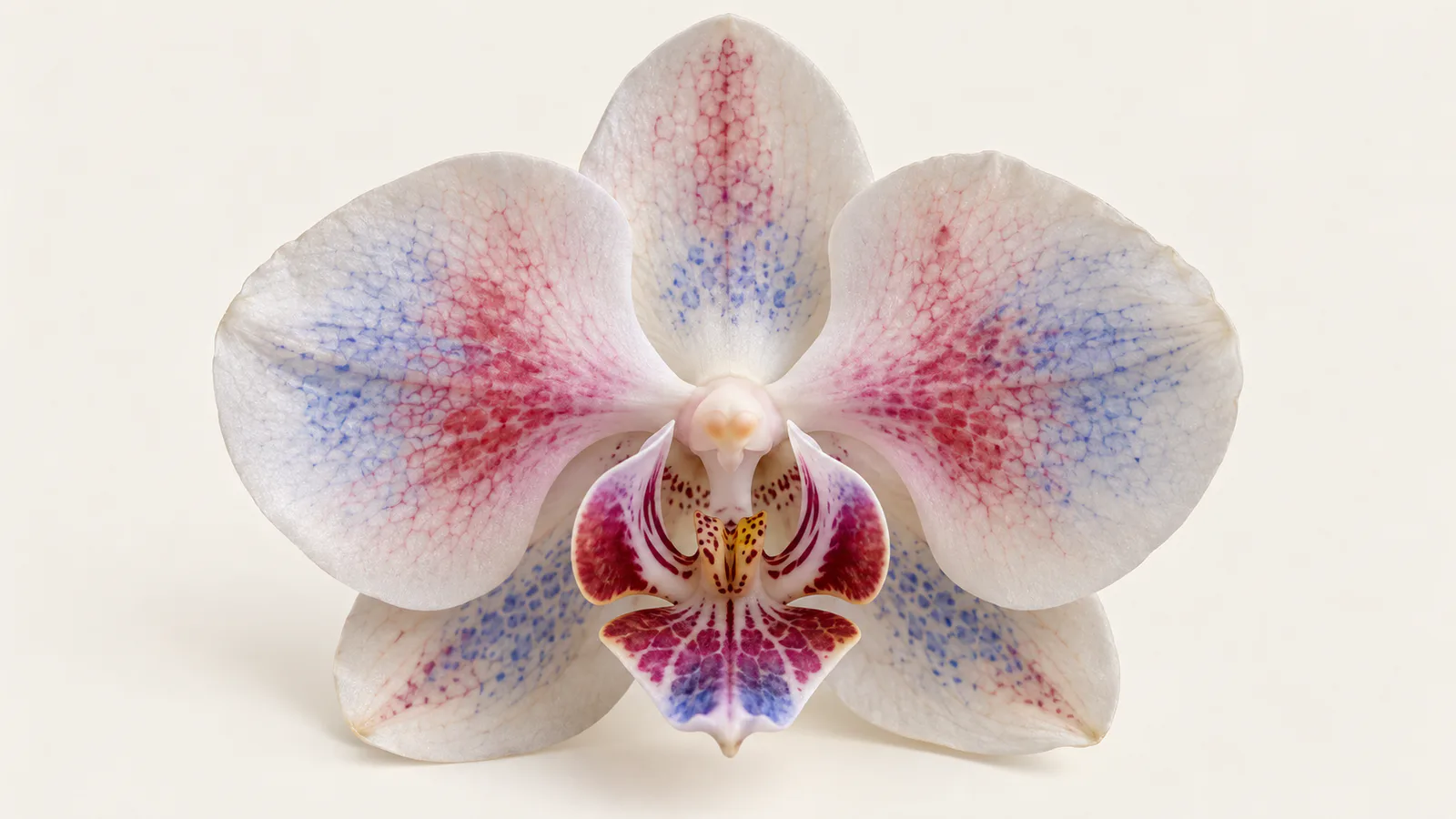
How Does the Shape of Orchids Relate to Gene Expression?
Learn how combinations of MADS-box gene expression give orchids their sepals, petals, lip, and column, with evidence from mutants and transcript studies.
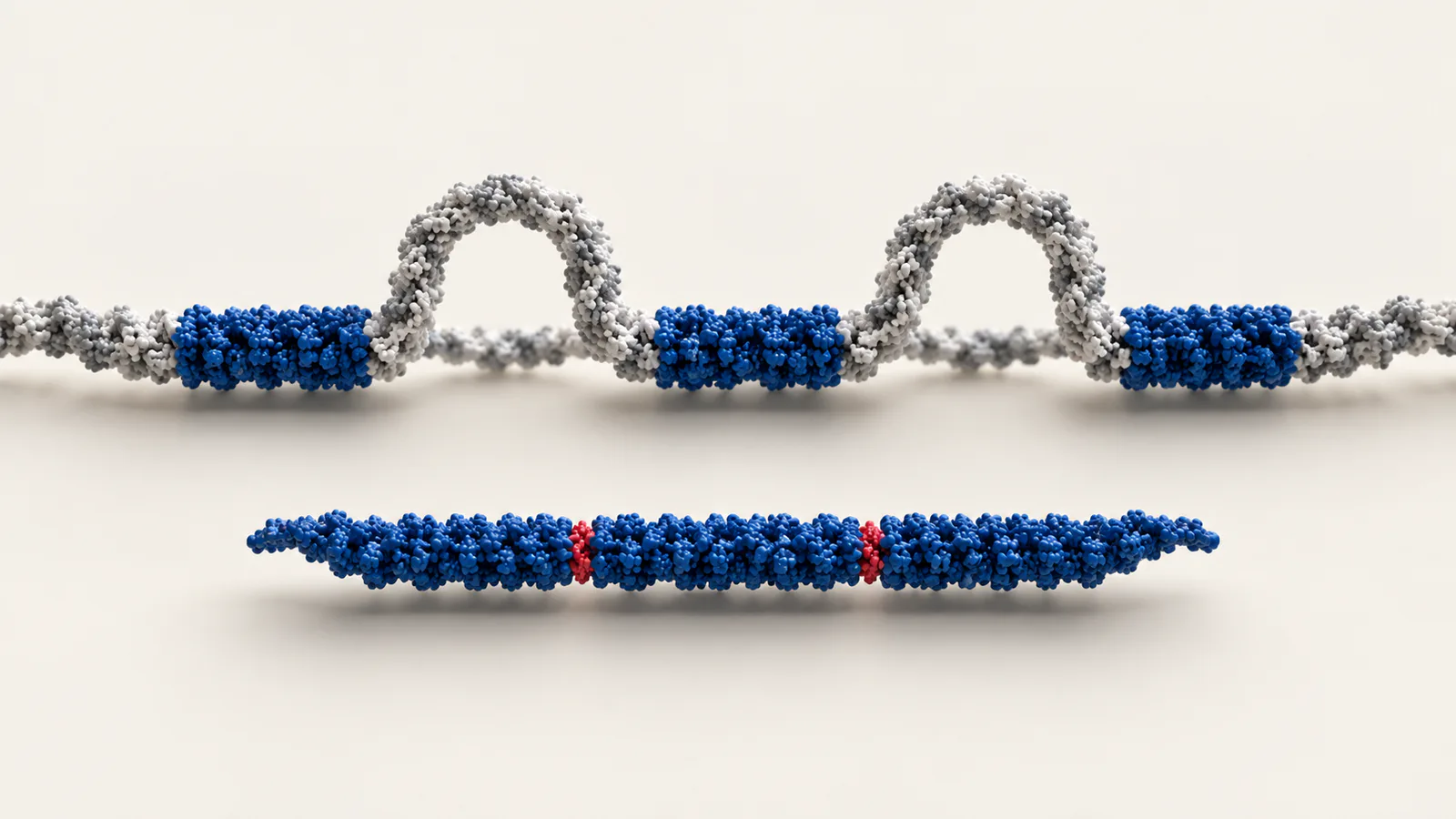
How to Identify Introns in a DNA Sequence
Identify introns using genome annotations or spliced transcript alignments, understand GT-AG splice signals, and avoid common coordinate and strand errors.

Match Each Mutation with Its Appropriate Description
Match missense, nonsense, silent, and frameshift mutations to their definitions, then learn how to classify substitutions, insertions, and deletions.
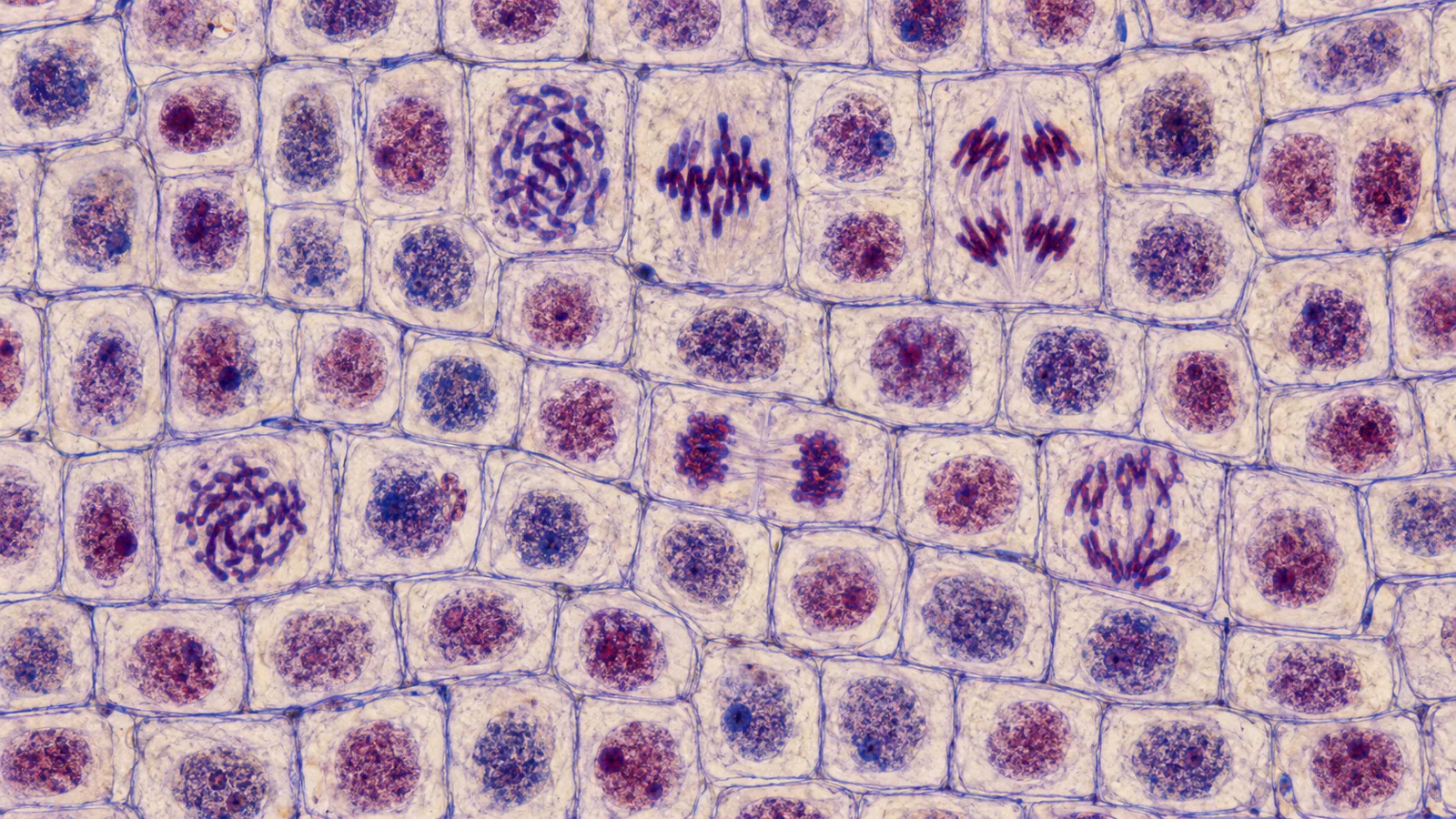
Table 1 Cell Cycle Predictions: Calculate Phase Times
Complete a Table 1 cell cycle prediction with the correct formula, a worked 24-hour example, mitosis phase estimates, and interpretation limits.
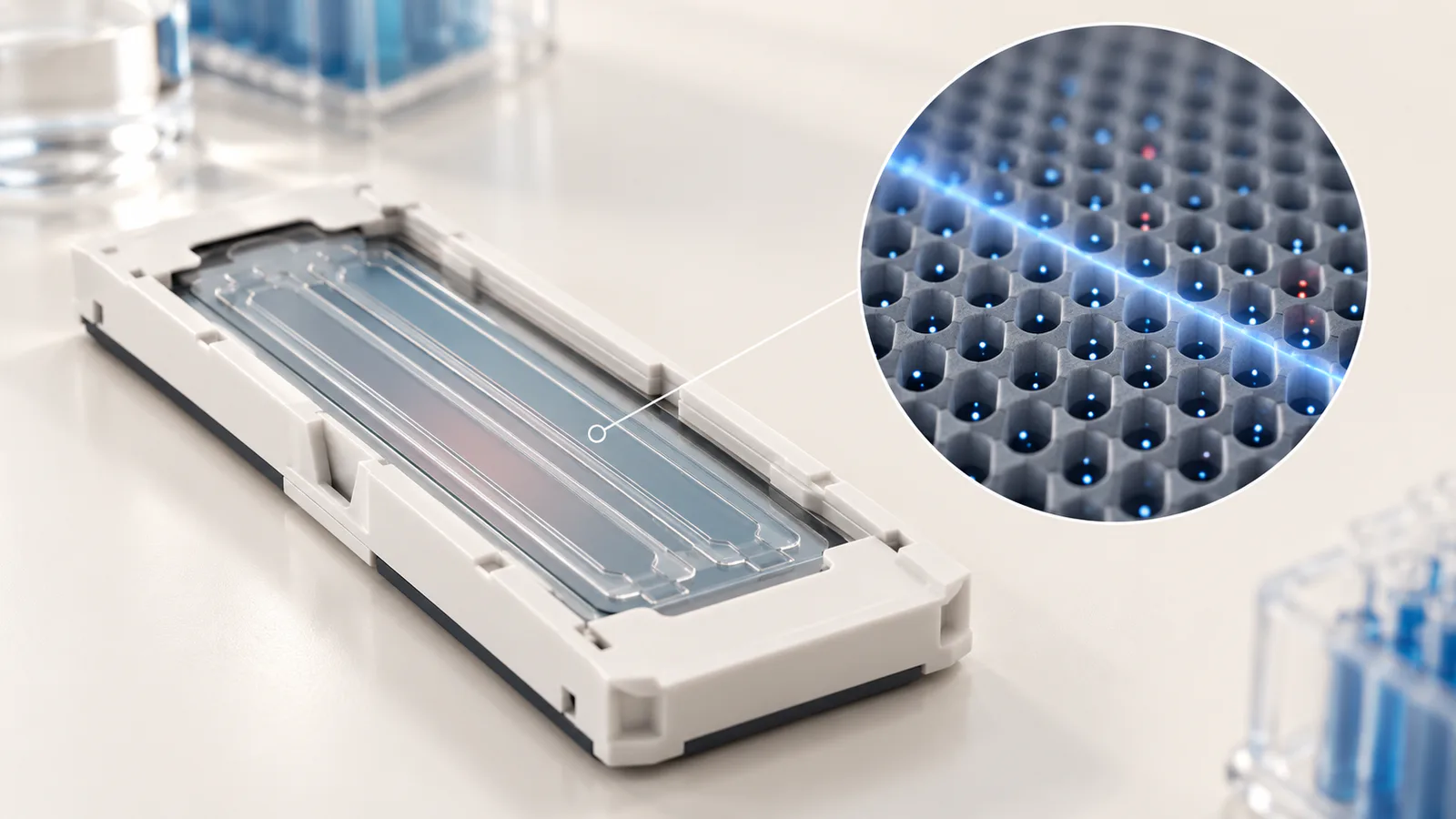
What Is a Flow Cell in Sequencing?
Learn what a sequencing flow cell does, how Illumina clusters and nanopore channels work, and how loading, density, and quality affect sequencing output.
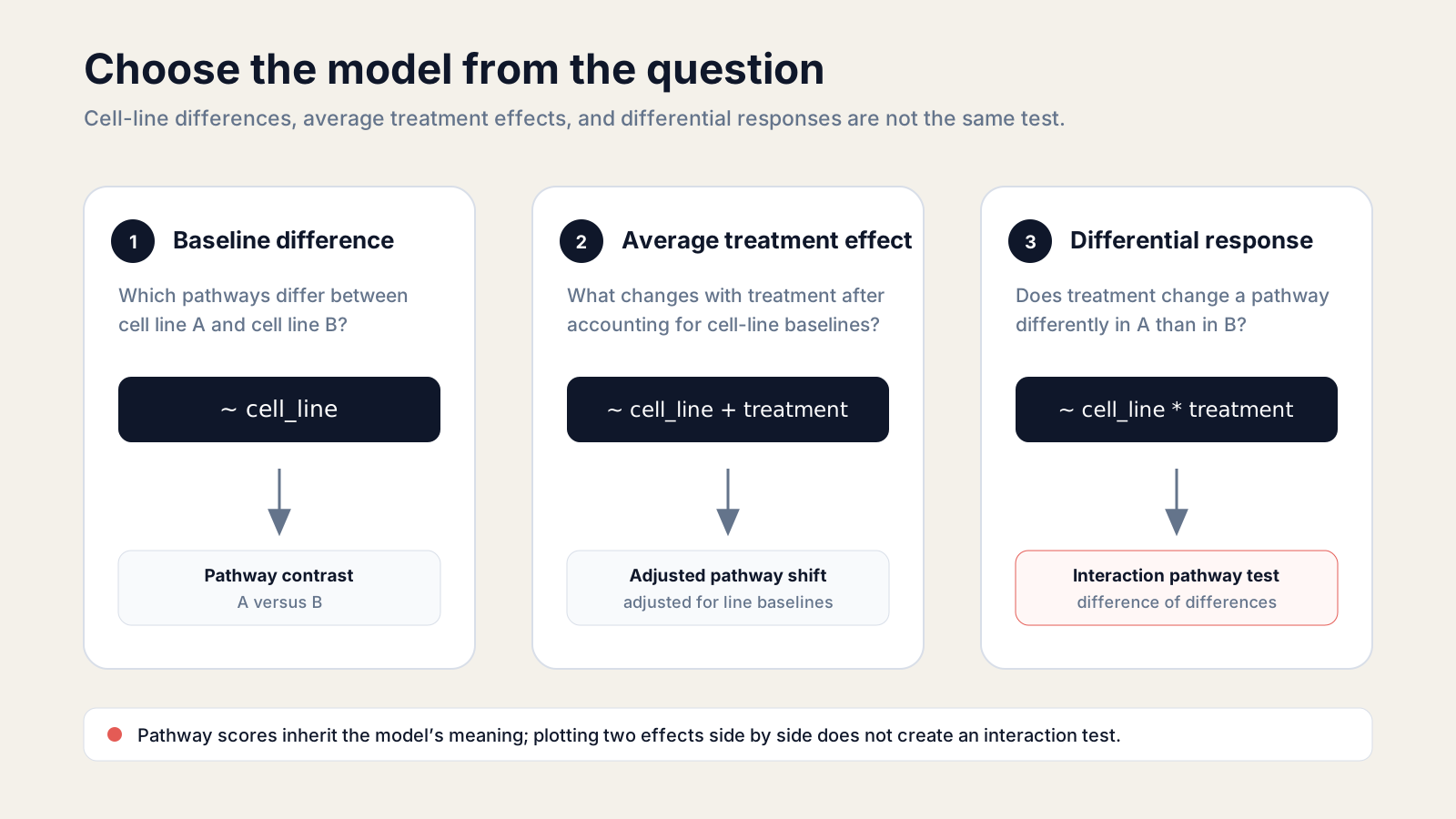
Cell Line Pathway Analysis: Methods and Comparisons
Choose valid RNA-seq designs for pathway comparisons across cell lines, including additive adjustment, stratified effects, and treatment-by-cell-line interactions.
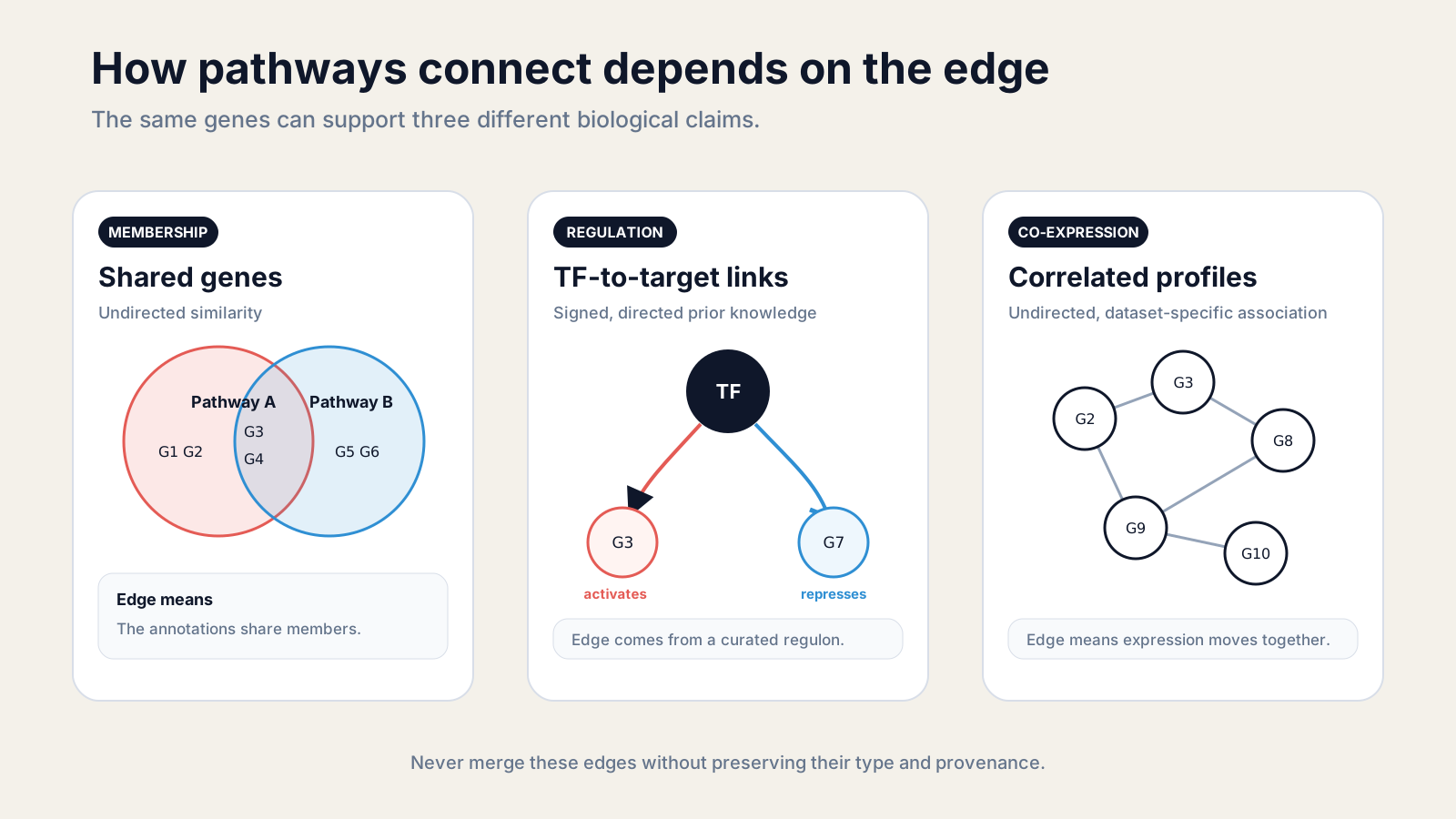
How Are Biological Pathways Connected?
Learn how shared genes, leading-edge drivers, transcriptional regulation, and co-expression connect pathways and how to build an interpretable pathway network.
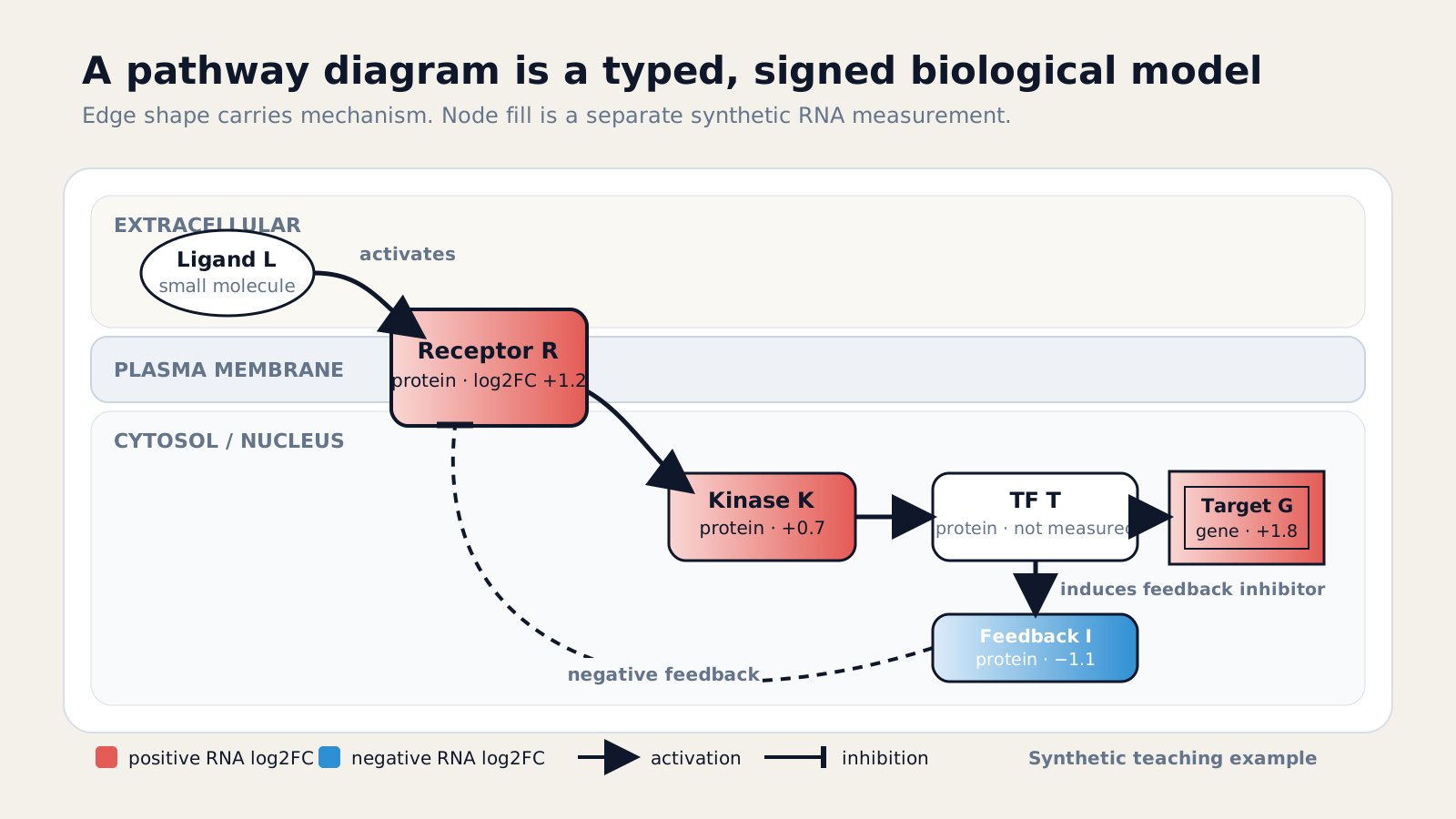
How to Build a Biological Pathway Diagram
Build a scientifically honest pathway diagram by defining scope, typing nodes and edges, mapping identifiers, overlaying data, and exporting a reproducible graph.
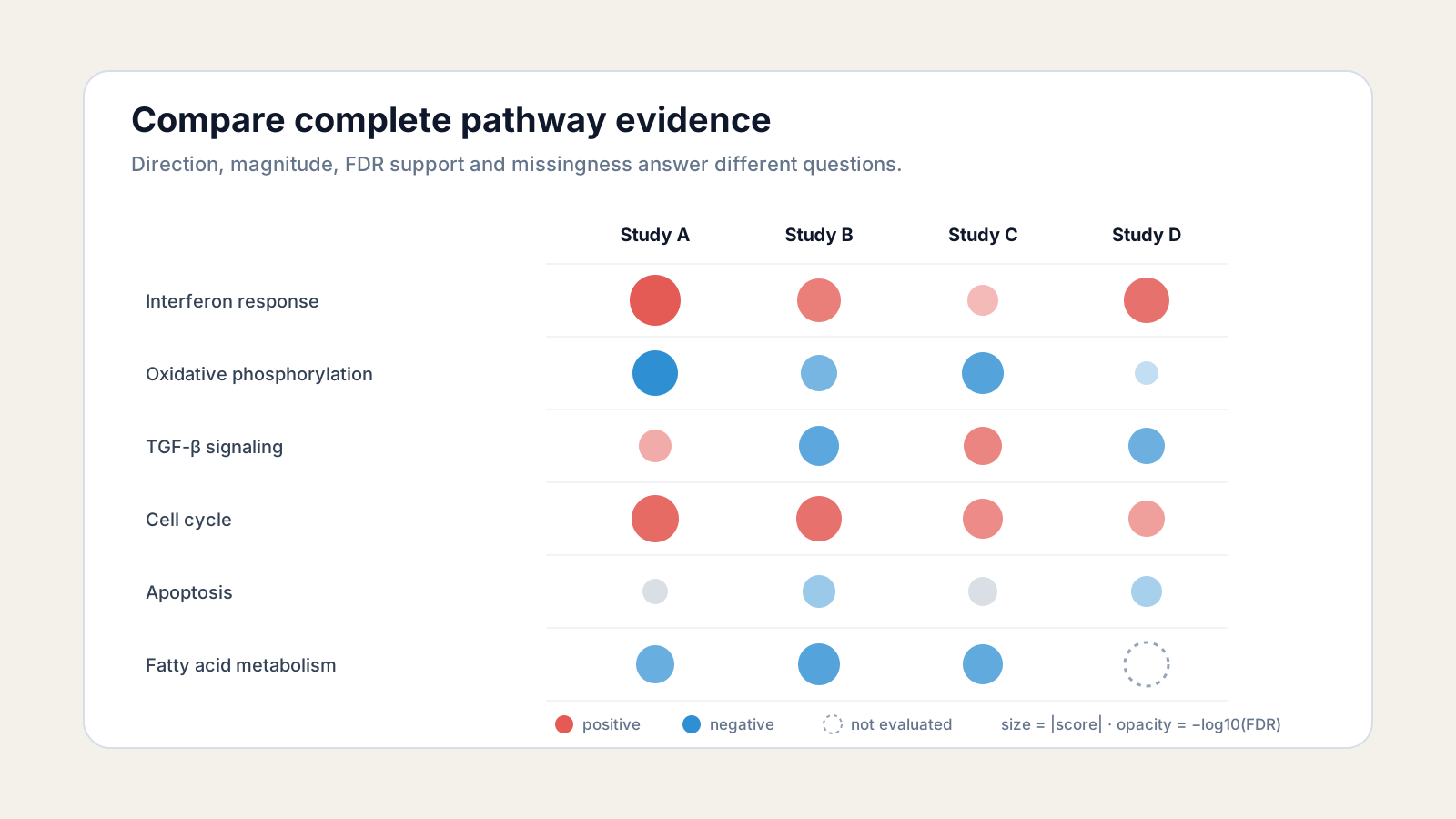
How to Compare Pathways Across Datasets
Compare pathway results across contrasts, studies, platforms, and species without losing direction, provenance, uncertainty, or missing values.
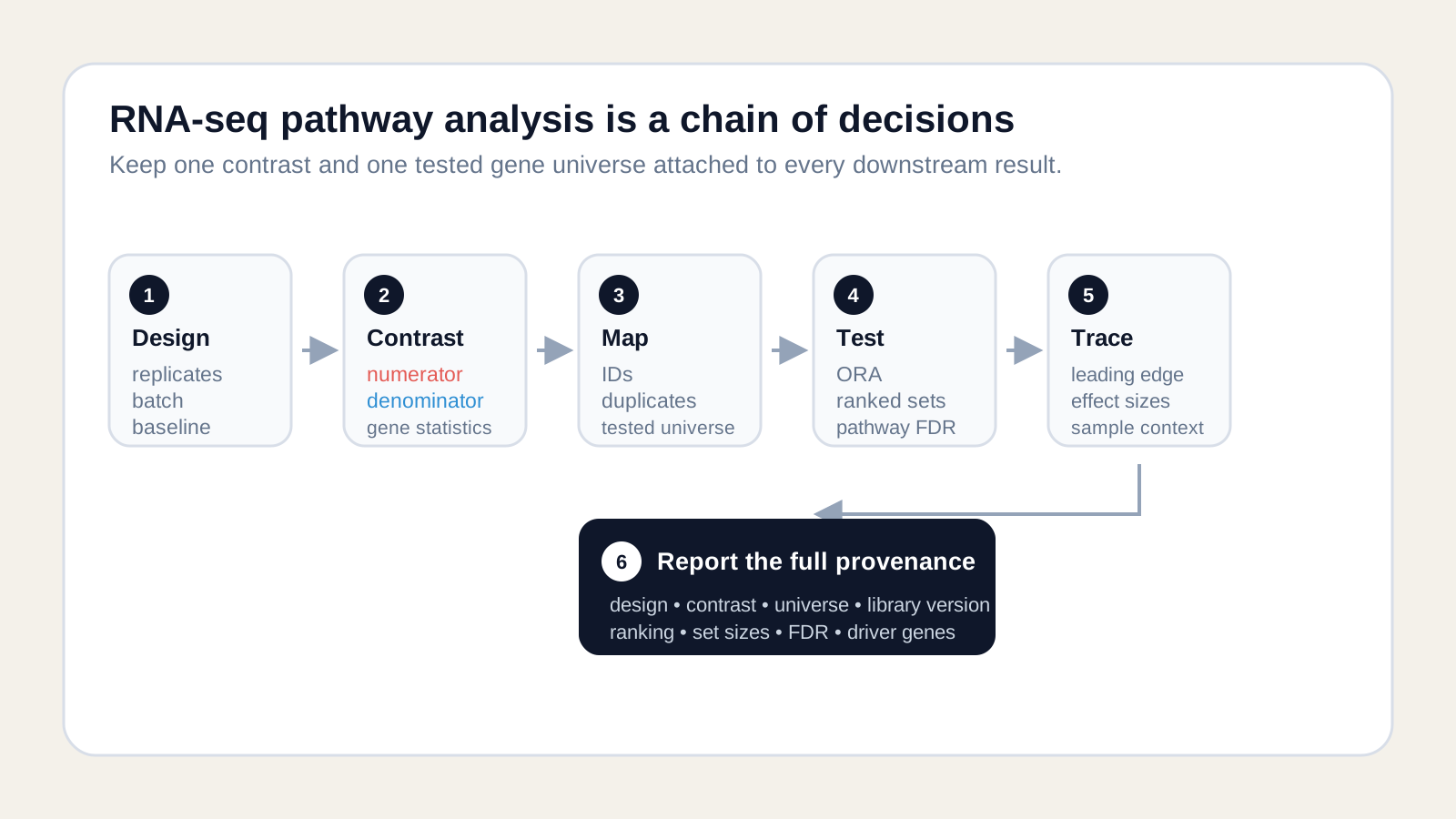
How to Do Pathway Analysis with RNA-Seq
A defensible RNA-seq pathway workflow: design contrasts, define the tested gene universe, rank genes, choose databases, control FDR, and audit driver genes.
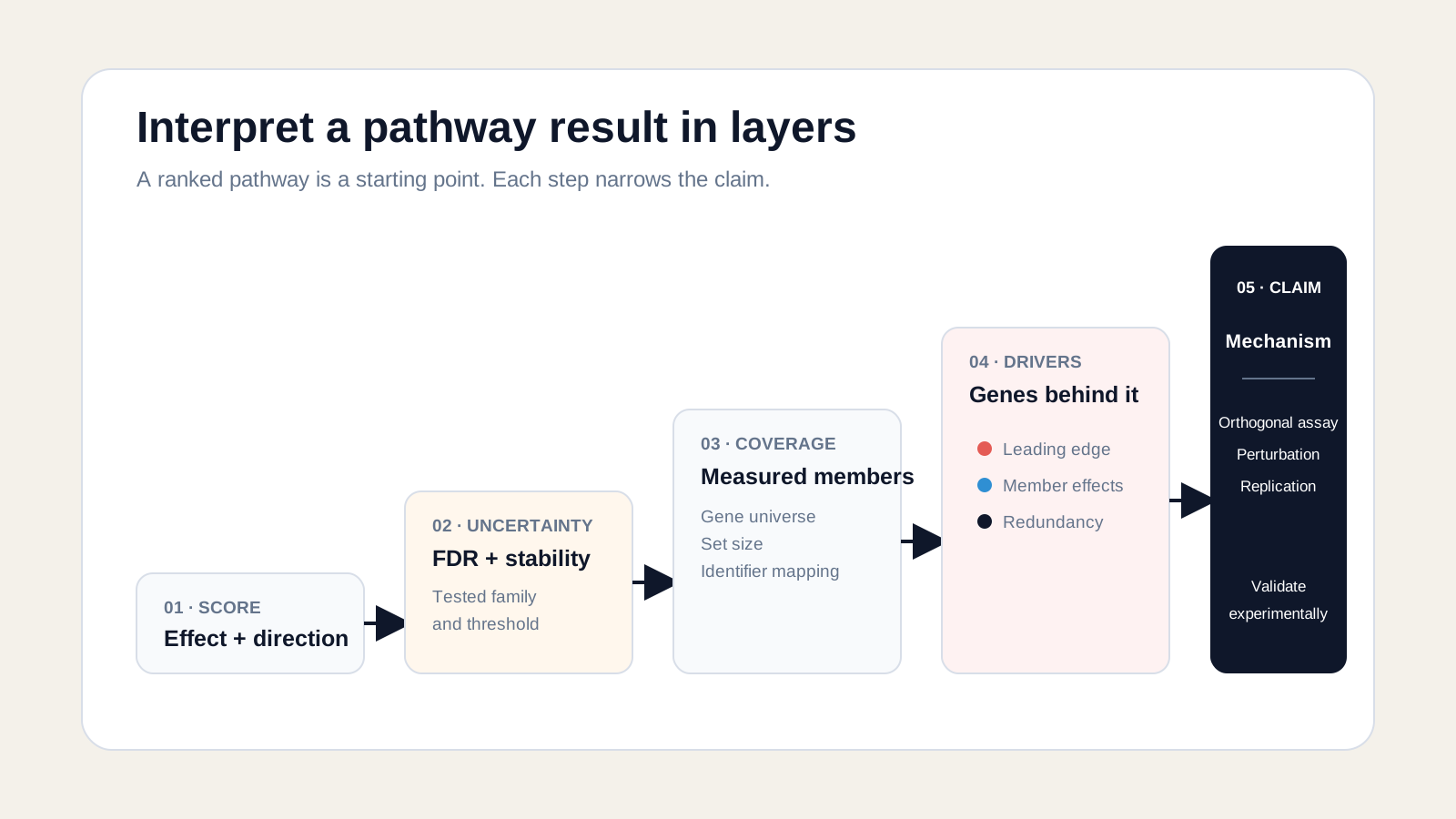
How to Interpret Pathway Analysis Results
Learn how to read pathway scores, FDR, direction, leading-edge genes, redundancy, topology evidence, and missing results without overstating the biology.
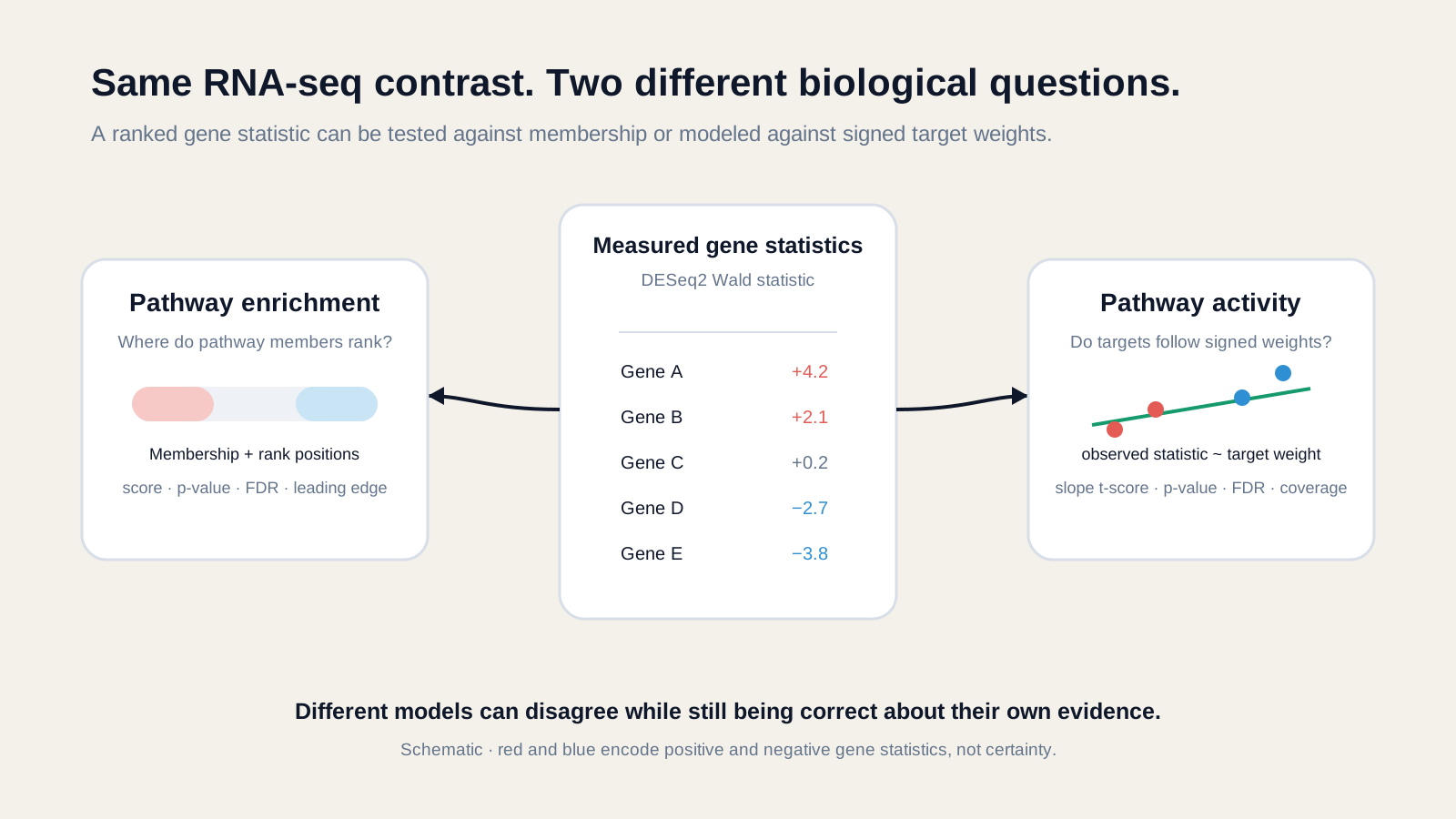
Pathway Enrichment vs Pathway Activity
Pathway enrichment tests gene-set membership or rank shift; pathway activity models signed target responses. Learn why the scores differ and how to interpret each.
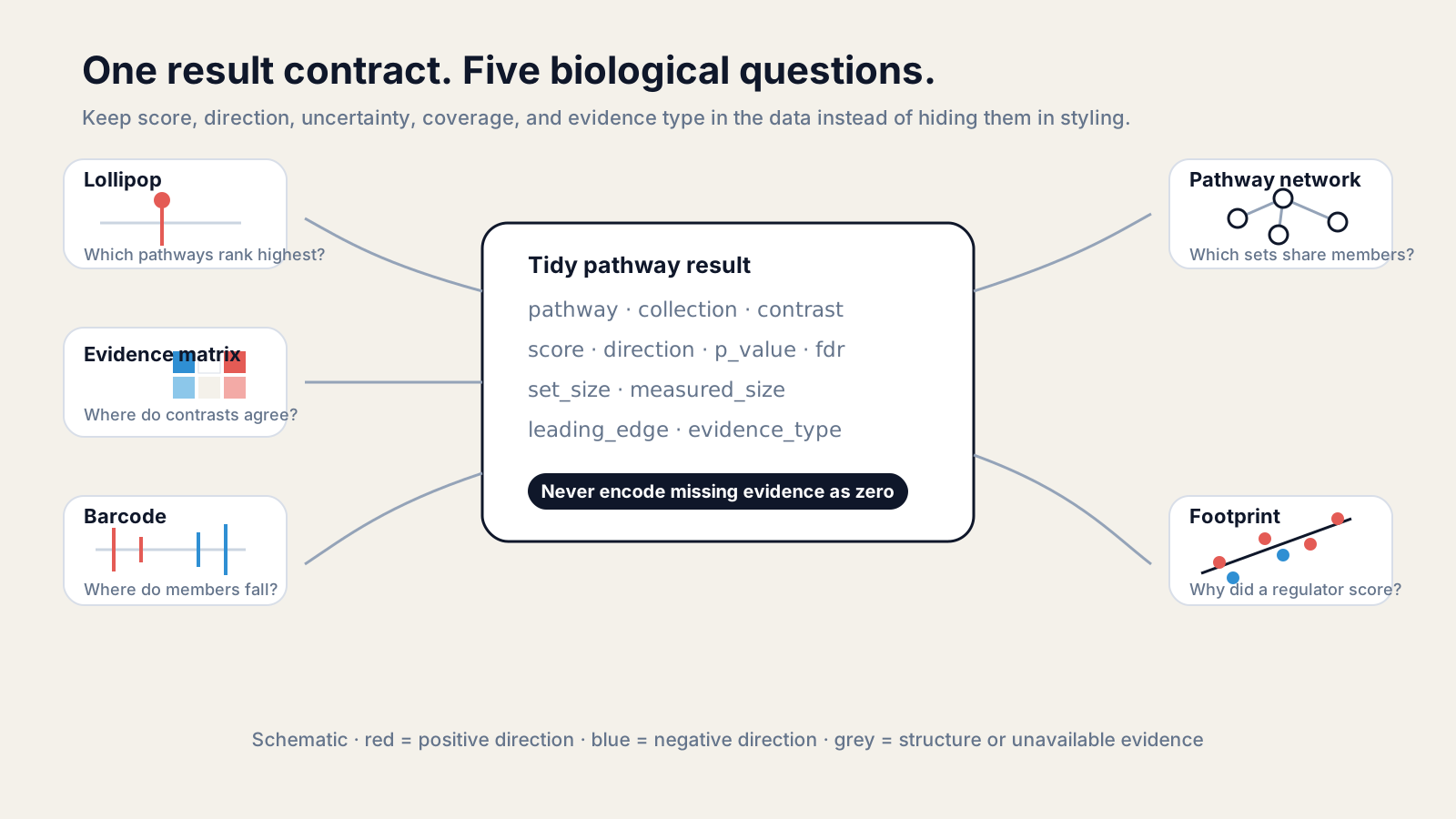
Pathway Visualization in Python
Build pathway lollipop plots, evidence matrices, ranked-gene barcodes, overlap networks, and regulator footprints in Python without hiding direction, FDR, or missing data.
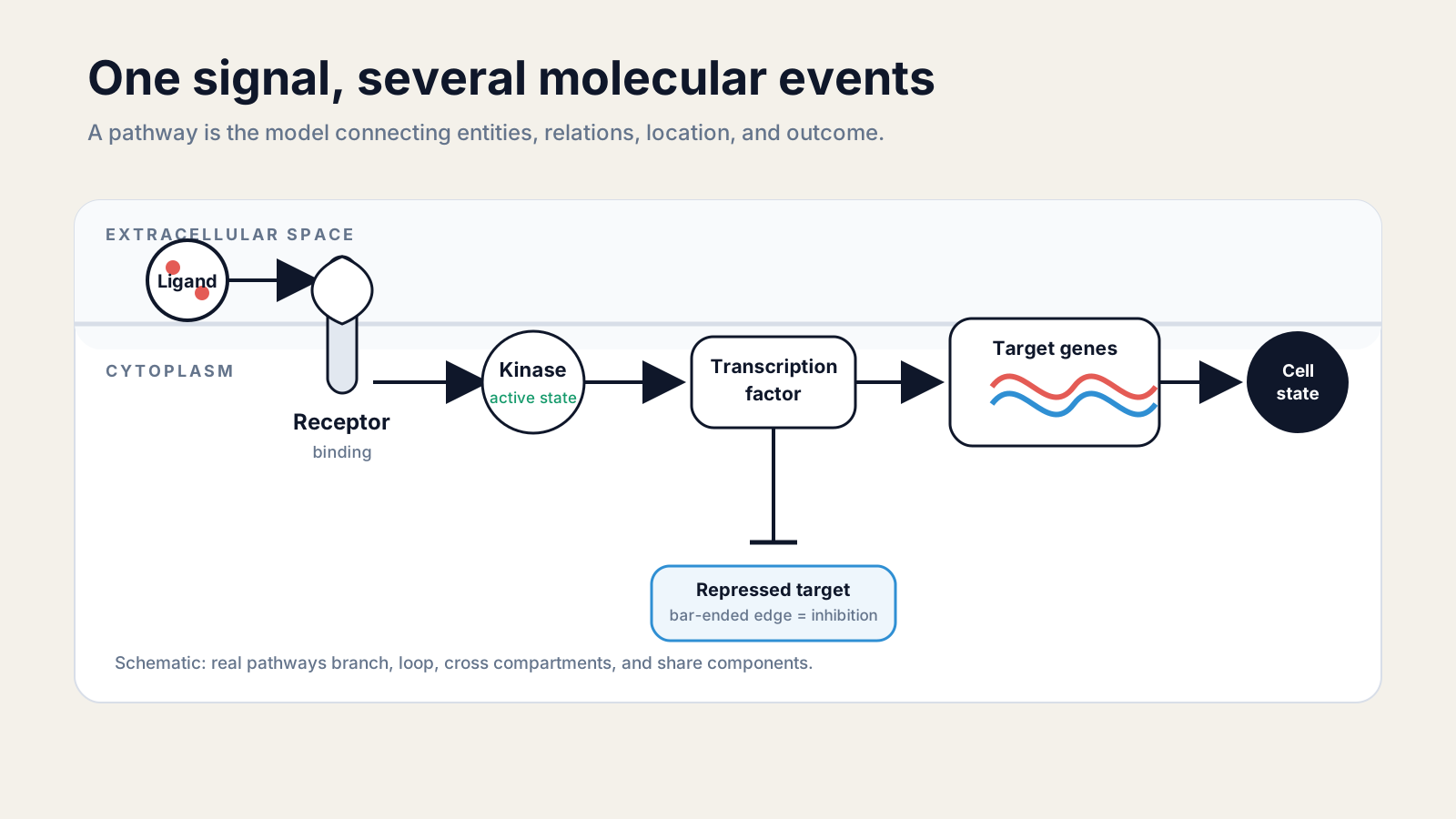
What Is a Biological Pathway?
A clear, technical guide to biological pathways, gene sets, pathway diagrams, signed graphs, networks, and how NotchBio keeps each evidence layer distinct.
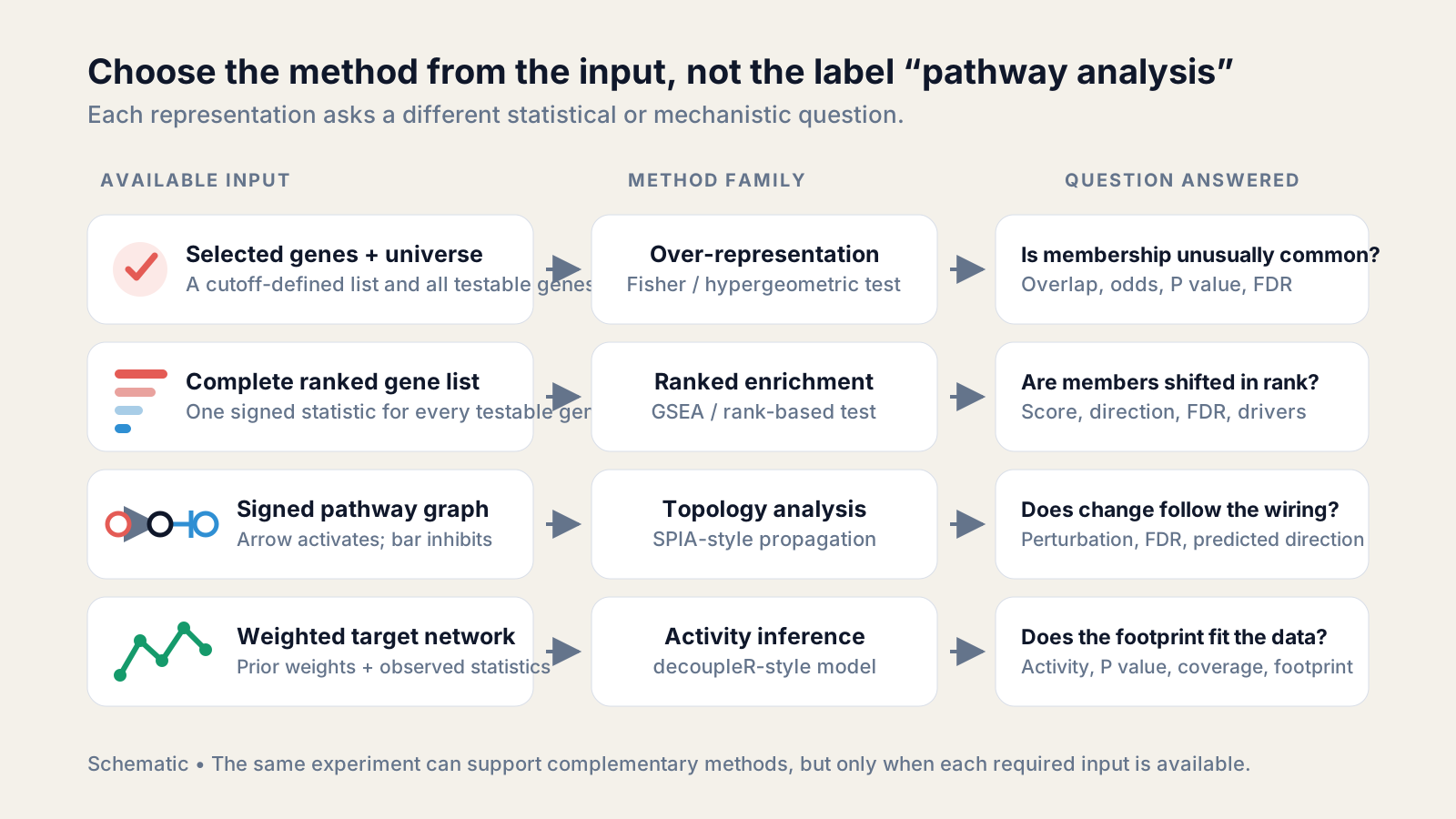
What Is Pathway Analysis?
Pathway analysis explained: choose ORA, ranked enrichment, topology analysis, or activity inference from the input and biological question.
RNA-Seq Read Length: Why Trimming Removes All Your Reads
Why RNA-seq trimming can discard every read, how read length and paired-end mismatches produce empty FASTQ files, and what to check before you run a pipeline.
How to Learn Bioinformatics as a Wet-Lab Scientist
A practical skill sequence for wet-lab biologists learning RNA-seq analysis: what to prioritise, what to safely skip, and what to outsource while you build.
How to Read a FastQC Report: Warnings, Failures, and Fixes
A senior bioinformatician walks through the FastQC sections that real beginners miss, with screenshots and decisions to make at each step.
GO Enrichment Analysis Mistakes: Backgrounds, FDR, and Bias
A 2022 PLOS Computational Biology study found 43% of GO enrichment analyses skip multiple test correction. Here is what that means and how to do it right.
RNA-Seq Analysis Without a Bioinformatician: What to Automate
If your lab sequences more than it analyzes, here is what self-service RNA-seq looks like, what is safe to automate, and where you still need a human.
STAR vs Salmon vs HISAT2: A Hands-On Benchmark
A hands-on RNA-seq aligner benchmark: working STAR, Salmon, and HISAT2 commands, real runtime and memory numbers, and how much the DEG list actually changes.
RNA-Seq Results Checklist for Publication and Peer Review
Reviewers reject RNA-seq papers for predictable reasons: missing FDR correction, version-less methods, inaccessible data. A checklist that prevents it.
Salmon From FASTQ to Counts: A Complete Tutorial
A complete Salmon tutorial with decoy-aware indexing, quantification flags explained, tximport into R, DESeq2 integration, and QC checks at every step.
How to Write an RNA-Seq Methods Section: Template and Checklist
A reviewer-proof RNA-seq methods section is shorter than you think but far more specific. Templates, required elements, and what reviewers always flag missing.
Why RNA-Seq Analyses Fail to Reproduce—and How to Fix Them
Half of published RNA-seq pipelines fail when someone else tries to run them. A practitioner view of what breaks and how to build for reproducibility.
PyDESeq2 vs DESeq2 in R: Validation and Scanpy Workflow
Does PyDESeq2 really match R DESeq2? A tutorial on validating results against R, running PCA with scanpy and AnnData, and exporting DEGs for enrichment.
Reproducible RNA-Seq Pipelines: Versions, Tools, and Provenance
Run snapshots, version pinning, and locked parameters should be the default, not a feature. A practitioner case for reproducibility-first RNA-seq platforms.
Bacterial RNA-Seq Pipeline: Operons, Counts, and DESeq2
Most bulk RNA-seq pipelines fail silently on bacterial data. Here is what changes for operons, GTF feature mismatches, and DE analysis in prokaryotes.
Publication-Ready RNA-Seq Plots in R with ggplot2
Reviewer-ready RNA-seq plots in R: volcano with gene labels, z-score heatmap with annotation bars, PCA with variance explained, and journal export settings.
How One Bioinformatician Can Support Multiple Research Labs
If you are the only bioinformatician serving multiple PIs, you are the bottleneck. Here is how to scale with templates, self-service, and clear handoffs.
ORA vs GSEA in R: clusterProfiler Pathway Analysis Tutorial
ORA and GSEA answer different questions. A working clusterProfiler tutorial with FDR correction, proper backgrounds, and side-by-side result interpretation.
What Is Log Fold Change? Log2FC in RNA-Seq
Log fold change measures the expression ratio between two conditions on a logarithmic scale. Learn log2FC direction, conversion, cutoffs, and DESeq2 use.
Nextflow vs No-Code RNA-Seq Pipelines: Which Fits Your Lab?
Nextflow is powerful and steep. No-code platforms are fast and constrained. A clear decision framework for which fits your lab today, and when to use both.
GTF vs GFF3 Files: Format Differences and RNA-Seq Fixes
GTF and GFF files from the same database often disagree, prokaryotic files lack exon features, AGAT fixes some and breaks others. A practical field guide.
Bioinformatics in Industry: Skills and Workflow Standards
Most commercial bioinformatics runs on academic instincts. A senior practitioner view on what industry needs and the engineering practices that close the gap.
Nextflow RNA-Seq Tutorial: Build Your First Pipeline
A minimal Nextflow DSL2 RNA-seq pipeline in under 80 lines: three processes, channel wiring, Docker config, and how to read the execution report and DAG output.
Reducing GO Term Redundancy: simplify, rrvgo, and What Works
After enrichment you get hundreds of overlapping GO terms. A tutorial on clusterProfiler simplify, rrvgo, REVIGO, and a custom uniqueness-score fallback.
Pathway Analysis in R: GSEA and ORA Tutorial
Run pathway analysis in R from DESeq2 results using clusterProfiler, fgsea, and MSigDB. Compare GSEA with ORA, visualize results, and avoid common errors.
Deterministic vs AI-Generated RNA-Seq Pipeline Code
Compare deterministic and AI-generated RNA-seq pipeline code: reproducibility, validation, failure modes, and where AI assistance is safe to use.
fastp vs Trimmomatic vs BBDuk: A Benchmark on RNA-Seq Reads
A side-by-side benchmark of fastp, Trimmomatic, and BBDuk on paired-end RNA-seq data: speed, post-trim quality, mapping rate, and downstream DEG impact.
DESeq2 Tutorial in R: Count Matrix to Volcano Plot
A complete DESeq2 tutorial in R: loading counts, building the design formula, running DE, applying lfcShrink, generating a volcano plot, and exporting results.
DESeq2 Contrasts: Multiple Conditions and Multi-Factor Designs
Three conditions, paired designs, two-factor experiments, and time courses: how to build the design formula, specify contrasts, and avoid common mistakes.
RNA-Seq Plots: Volcano, MA, and Heatmap in R and Python
Publication-ready RNA-seq plots in R and Python: volcano with ggplot2/ggrepel, MA plots, and DEG heatmaps with pheatmap and seaborn, plus 300 dpi export.
Bulk RNA-Seq Deconvolution: CIBERSORTx and MuSiC Tutorial
Estimate cell type proportions from bulk RNA-seq using CIBERSORTx and MuSiC. Reference selection, batch correction, validation, and result interpretation.
Bulk RNA-Seq vs Single-Cell RNA-Seq: Which Should You Use?
Single-cell RNA-seq dominates conferences but bulk RNA-seq remains the right tool for most experiments. A decision framework for choosing your modality.
RNA-Seq Batch Correction: ComBat-Seq vs RUVSeq vs sva
How to choose a batch-effect correction tool: ComBat-Seq, RUVSeq, and sva compared, including unknown batch sources and reporting it in your methods.
How to Get a Bioinformatics Job in 2026: Hiring Trends
How to get a bioinformatics job in 2026: the skills employers want, why entry-level pipeline roles are changing, and how to build a credible portfolio.
Salmon to Differential Expression in Python with PyDESeq2
A pipeline-focused PyDESeq2 tutorial: load Salmon quant.sf into a count matrix, fit a DeseqDataSet, run Wald tests, apply apeGLM shrinkage, export DEGs. No R.
How to Run DESeq2 in R from Salmon quant.sf Files
DESeq2 in R from Salmon counts: import quant.sf with tximeta, build a DESeqDataSet, run the Wald test, apply apeglm shrinkage, and export a ranked DEG table.
How to Build a DESeq2 Count Matrix in Python
Python tutorial: parse featureCounts output, aggregate Salmon quant.sf, build a tx2gene map, and save a DESeq2-ready integer count matrix with pandas.
STAR RNA-Seq Alignment Tutorial: FASTQ to Gene Counts
Complete STAR tutorial: download genome and GTF, build an index with the right sjdbOverhang, run paired-end alignment, and load GeneCounts into R for DESeq2.
How to Build a Decoy-Aware Salmon Index for RNA-Seq
Step-by-step Salmon tutorial: download GENCODE references, build a decoy-aware index, run salmon quant with gcBias and seqBias, and verify mapping rates.
FASTQ Quality Control: FastQC, fastp, and MultiQC Workflow
Bulk RNA-seq QC end to end: run FastQC on raw reads, trim adapters with fastp, rerun QC, and aggregate everything into one MultiQC report, with parallel runs.
How to Download RNA-Seq FASTQ Data from GEO and SRA
Download bulk RNA-seq FASTQ files from GEO and SRA: prefetch, fasterq-dump, pysradb metadata, batch downloads, and fixes for the most common errors.
Volcano and MA Plots in R: DESeq2 and ggplot2 Tutorial
Publication-quality volcano and MA plots from DESeq2 results in R: ggplot2 from scratch, ggrepel gene labels, EnhancedVolcano, and how to read them.
RNA-Seq PCA and Sample Clustering in Python: QC Tutorial
Python tutorial: normalize RNA-seq counts, run PCA with scikit-learn, build a sample distance heatmap, and spot outliers before differential expression.
PyDESeq2 Tutorial: Differential Expression Analysis in Python
The complete PyDESeq2 reference in Python: DeseqDataSet, DeseqStats, apeglm shrinkage, multi-factor designs, multiple contrasts, and pandas result filtering.
DESeq2 Tutorial in R: From Count Matrix to Results
Step-by-step DESeq2 in R: build a DESeqDataSet, understand size factors and dispersion, run DESeq(), interpret the results columns, then shrink and filter DEGs.
Set Up an RNA-Seq Conda Environment on Ubuntu or macOS
Install Miniforge, conda, bioconda, R 4.4, and DESeq2 for bulk RNA-seq: reproducible environments, version pinning, and fixes for common install errors.
Salmon quant.sf Explained: Mapping Rates and DESeq2 Import
Understand Salmon quant.sf columns, mapping rates, effective length, NumReads, TPM, and the correct handoff to tximport, tximeta, and DESeq2.
tximport vs tximeta: Import Salmon quant.sf into DESeq2
Import Salmon quant.sf into R with tximeta and tximport: build a tx2gene table, fix ID-mismatch errors, and set up a DESeqDataSet for multi-factor designs.
Cell Line RNA-Seq Experimental Design: 7 Failure Modes
Seven cell line RNA-seq design failures—including passage drift, mycoplasma, serum lots, and pseudoreplication—with prevention and QC checks.
STAR vs HISAT2 vs Salmon: Which Aligner Should You Use?
STAR aligns to the genome, HISAT2 uses less memory, Salmon skips alignment. What each approach means for your RNA-seq results and when each is the right call.
What Is GSEA? Gene Set Enrichment Analysis Explained
Gene Set Enrichment Analysis explained: ranked gene lists, enrichment scores, NES, FDR, leading-edge genes, and an fgsea tutorial in R.
RNA-Seq Sample Preparation: RNA Extraction to FASTQ Files
RNA-seq sample preparation from RNA extraction and quality checks through library preparation, Illumina sequencing, base calling, and FASTQ files.
When to Use edgeR vs DESeq2 vs limma-voom
edgeR vs DESeq2 vs limma-voom for RNA-seq: compare models, normalization, low-count behavior, complex designs, and when to use each method.
Understanding Your QC Report: FastQC and MultiQC
A module-by-module guide to reading FastQC and MultiQC output for RNA-seq data — what each plot means, which failures matter, and which you can safely ignore.
How DESeq2 Actually Works (Without the Math Overload)
The negative binomial model, size factors, dispersion shrinkage, and what each output column really means: DESeq2 explained for working researchers.
How to Detect and Correct RNA-Seq Batch Effects in DESeq2
How to detect batch effects with a PCA plot and correct them in DESeq2 using a design covariate, ComBat-seq, and limma removeBatchEffect for visualization.
RNA-Seq Count Matrix Explained: Raw Counts vs TPM vs FPKM
Raw counts, TPM, FPKM, and DESeq2-normalized values each represent expression differently. What each one is, why it matters, and which to use downstream.
RNA-Seq Experimental Design: 5 Mistakes That Break DESeq2
Replicates, confounders, paired designs, and pseudoreplication: the experimental design decisions that decide whether your DESeq2 results hold up.
Reference Genome Types for RNA-Seq: Does the Choice Change Results?
Compare GENCODE, Ensembl, RefSeq, and UCSC reference annotations for RNA-seq and learn how genome assembly and GTF choice change counts and DEGs.
fastp vs Trimmomatic: RNA-Seq Adapter Trimming Tutorial
When adapter trimming helps, when it hurts, and how to run Trimmomatic and fastp on RNA-seq data with the parameter choices that actually matter.
How to Run FastQC and MultiQC on Multiple FASTQ Files
A hands-on guide to automating RNA-seq QC across dozens of samples using FastQC and MultiQC, with bash and Python scripts for parsing and flagging failures.
Bulk RNA-Seq Pipeline: FASTQ to Gene Counts Step by Step
Every computational step in bulk RNA-seq, explained: from FASTQ quality control through trimming, alignment, and quantification to your final count matrix.
What Are Batch Effects in RNA-Seq? Causes and Examples
What batch effects are, why they happen in bulk RNA-seq, and how they quietly corrupt your differential expression results — the concepts to grasp first.